Author Archives: T.C. Kelly

About T.C. Kelly

Prior to his retirement, T.C. Kelly handled litigation and appeals in state and federal courts across the Midwest. He focused his practice on criminal defense, personal injury, and employment law. He now writes about legal issues for a variety of publications.

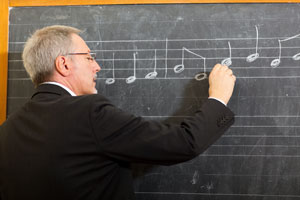
Man studying music notes on a blackboard

Court Denies Justin Bieber’s Request to Delay Filing of Expert Report

Justin Bieber and Usher may be forced to go to trial in a copyright infringement lawsuit without an expert witness. The presiding judge denied their motion to extend the deadline for providing an expert witness report. Without the benefit of an expert musicologist, Bieber and Usher will have a more difficult challenge as they attempt to persuade the jury that the hit song “Somebody to Love” was not copied, at least in part, from a song with the same title that was written by Devin Copeland and Mareio Overton.

Copyright Infringement Lawsuit

Copeland, an R&B artist, released his version of “Somebody to Love” in 2008 under the name De Rico. Copeland and Overton registered a copyright to the song. A company that recruits artists for major labels gave a promotional copy of the song to its clients, including Usher.

Copeland alleges that Usher’s mother, who is also his manager, told him that they were interested in having Copeland join Usher on tour after Copeland recorded an anticipated album. The album included the song “Somebody to Love.” Copeland says Usher’s mother never followed up on that suggestion.

Months later, Usher recorded a demo of a song titled “Somebody to Love.” He posted the demo to YouTube but did not release it commercially. Bieber, who regards Usher as a mentor, worked with Usher to record his own version of Usher’s demo.

Bieber’s version of “Somebody to Love” was included on his first album. The song was a success, peaking at number 15 on the Billboard Hot 100 chart. A month or two later, Usher and Bieber released a remix of the song. Both Usher and Bieber performed on the remix, with was otherwise virtually the same as Bieber’s solo version.

Copeland claimed that the Usher/Bieber song copied original, copyrighted content from his song. He sued in federal court for copyright infringement. The district court judge dismissed the lawsuit without a trial after deciding that no reasonable jury could find that the two songs were substantially similar. Copeland appealed.

Copeland’s Appeal

The Court of Appeals noted that copyright infringement requires proof that the defendant copied original, copyrightable elements of the plaintiff’s work (in this case, a song). Copying can be inferred from evidence that the defendant had access to the song and that the defendant’s song is substantially similar to the copyrighted song.

The Court of Appeals scrutinized the two songs for “substantial similarity” by making an extrinsic and an intrinsic inquiry. The extrinsic inquiry is objective. The question is whether the original elements of the first song closely match similar elements in the second song. The court noted that plaintiffs typically rely on expert evidence to establish that the first song has original elements and that the same elements appear in the second song. If they do, an inference can be drawn that the creator of the second song copied those elements from the first song, provided that the creator of the second song had access to the first song.

The intrinsic inquiry is subjective. It asks whether the song’s intended audience would experience the two songs as similar in their overall effect. The intrinsic test relies on an aesthetic judgment regarding the “concept and feel” of the two songs.

A plaintiff suing for copyright infringement must establish both extrinsic similarity and intrinsic similarity. The district court dismissed the lawsuit without considering extrinsic similarity because it decided that no reasonable jury could find that the songs were intrinsically similar. The court of appeals disagreed.

The district court decided that Copeland’s song and Bieber’s song were different in tone and mood. The court of appeals acknowledged that the songs are written to accommodate different genres. Copeland’s song is performed in an R&B style while Bieber’s fits within the genre of dance pop. Yet differences in genre alone do not make songs intrinsically dissimilar. If that were true, the court explained, a reggae version of a Beatles song would not violate the Beatles’ copyright.

The court of appeals also acknowledged that the two songs are dissimilar in more ways than they are similar. Lyrics, melodies, and beats are all different, at least in some respects, when the songs are compared side-by-side.

Yet the question at this stage of the case is not whether a court believes the two songs are intrinsically similar, but whether a jury could find that they are intrinsically similar. The court of appeals thought that the chorus or “hook” in each song, from the shared lyric “I need someone to love” to the strikingly similar rhythm and melody, could cause a general audience to believe that the two songs were similar in their overall effect. In fact, the court suggested that the audience would want to sing along with the chorus in each song for the same reasons. Since the chorus was substantially important to the overall effect of the two songs, and since a jury could find that the choruses are intrinsically similar, the court of appeals decided that Copeland was entitled to have a jury decide whether Bieber and Usher copied Copeland’s song.

Preclusion of Bieber’s Expert Witness

As the court of appeals noted, the extrinsic similarity of two songs in a copyright infringement trial is usually the subject of expert testimony. Musicologists on both sides typically express opinions about which components of a song are original and whether original components in the first song are repeated in the second song.

Expert witnesses in federal cases must prepare reports. Those reports must be disclosed before a deadline established in a scheduling order. Copeland and Bieber jointly asked the district court judge to amend the court’s scheduling order. Joint motions are routinely granted and, if the judge had consented, Bieber would have had until April 15 to file his expert report.

Defying the expectations of Bieber’s attorneys, the judge denied the motion. She is reportedly frustrated by repeated delays in the case and wants to assure that it goes to trial in October. The judge denied the motion on March 30, after Bieber’s lawyers had already missed the March 21 deadline to file their expert report.

Scrambling to avoid going to trial without an expert witness, Bieber’s lawyers are asking the judge to reconsider. They explained that their expert musicologist is busy with other cases, including a lawsuit alleging that Jimmy Paige copied parts of “Stairway to Heaven” from a song by the band “Spirit.” They also advised the court that they would have hired an expert who is less busy if they had known the court would deny the joint motion to amend the scheduling order.

The court might agree to allow the expert report to be filed late. On the other hand, it might rule that courts, not parties, set deadlines and that parties have an obligation to comply with those deadlines. If Bieber and Usher are forced to go to trial without an expert, they may have little hope of contesting the claim that the songs are extrinsically similar, forcing them to hinge their defense on the argument that the songs are substantially different in concept and “feel.”
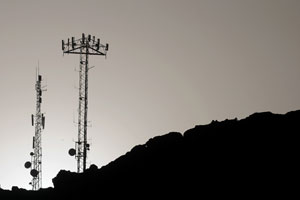
Cellphone Tower

Cellphone Experts Give Opposing Testimony in Fraud Trial

Experts continue to argue about whether the data provided by mobile phone companies can reliably establish the location of a cellphone (and, by implication, its owner) at a particular time of day. When cellphones are on, they periodically “ping” a tower. Experts who use the tower’s location to track the approximate location of the phone assume that the phone pinged the nearest tower. Based upon the relative location of towers, experts draw a “coverage map” to show the area where the phone might have been during each ping.

As ExpertPages has noted in the past, the validity of coverage maps depends upon the assumption that the cellphone actually pinged the closest tower. An expert in a recent Long Island, New York trial suggested that the assumption may not be valid.

Ed Walsh Trial

Federal prosecutors charged Ed Walsh, the chair of the Suffolk County Conservative Party, with theft of government funds and wire fraud. Walsh was employed as a corrections lieutenant by the Suffolk County Sheriff’s Office and was assigned to the Suffolk County Jail. Instead of working, however, prosecutors contended that Walsh was golfing, gambling in Connecticut, or conducting Conservative Party business.

Walsh was paid a salary of $127,000 per year. He is accused of defrauding taxpayers of about $200,000 from 2011 to 2014 by collecting a salary while not showing up for work. Prosecutors contended that the Suffolk County District Attorney covered up Walsh’s malfeasance and interfered with investigations by law enforcement agents. Media reports describe Walsh as a “backdoor kingmaker” in Suffolk County politics.

The Sheriff disputed Walsh’s claim that he had “flex time” and could make up hours whenever he wanted. Walsh’s lawyers contended that the Sheriff’s testimony was politically motivated. The Sheriff, however, is also a member of the Conservative Party.

Federal prosecutors compared Walsh’s time sheets, which logged the times he claimed to be working, with records from a casino and various Long Island golf courses to prove that Walsh was not working while he was supposedly earning his salary. Prosecutors also relied on the testimony of an engineer concerning the location of Walsh’s cellphone.

Disputed Cellphone Testimony

To confirm the accuracy of other records and testimony showing that Walsh was in a casino or on a golf course when his time sheets showed he was working, prosecutors relied on the expert testimony of a cell tower engineer. By analyzing records provided by Walsh’s cellphone service provider, the engineer created maps showing the areas where Walsh could have been when his phone pinged the tower.

Since Long Island cellphone towers are located about four miles apart, a cellphone that pings the nearest tower will not usually be more than two miles from that tower. The engineer used that reasoning to narrow down Walsh’s location, placing him near the Long Island golf courses where, according to the prosecution, he was golfing rather than working.

The defense countered with its own expert, a senior manager at Cherry Biometrics, who questioned the assumption that Walsh’s phone always pinged the closest tower. According to the defense expert, cell phones can ping towers up to 21 miles from the phone’s location, even if they are not the nearest towers. He testified that phones link with towers that have the clearest signal. The tower with the clearest signal may or may not be the closest tower.

Other experts have concluded that using cell tower records to track a mobile phone user will not necessarily yield accurate results. Despite the FBI’s heavy reliance on a questionable methodology to track cellphone users, some federal judges have ruled that the FBI’s analysis of cellphone records is not a scientifically valid or reliable means of locating people. One innocent woman was wrongly convicted of murder and imprisoned for 12 years, largely on the basis of mistaken cellphone tracking evidence.

Critics have condemned cellphone tracking as junk science. Defense experts are increasingly being employed to counter the claims of prosecutors that they are able to link a defendant to a particular location by using cellphone records.

The Walsh Verdict

Some cases turn on expert evidence and others don’t. The jury in the Walsh trial deliberated for about an hour before finding Walsh guilty. In the end, the multiple witnesses who saw Walsh playing golf or gambling, and the written records of golf cart rentals and casino payouts, made the dispute about cellphone tracking a sideshow. In cases where cellphone tracking evidence is necessary to secure a conviction, however, experts are likely to play a decisive role.

Texas flag and gavel

When Expert Opinion Amounts to Speculation

Attorneys do not often serve as expert witnesses, in part because only the judge who presides in a trial is the expert in the law that controls the case. In some cases, however, attorneys do serve as expert witnesses. They do so most often in legal malpractice cases, when they testify about the quality of representation a reasonable lawyer should provide and express opinions as to whether a particular lawyer met that standard.

An attorney was allowed to testify in a Texas malpractice case involving a technology company and its patent lawyers. The Texas Court of Appeals recently ruled, however, that the expert’s testimony was based on speculation rather than facts. Since the testimony failed to establish that the plaintiff was harmed by the alleged malpractice, the plaintiff could not prevail.

Lawsuit Background

Axcess International markets radio frequency identification (RFID) products and services. Axcess improved its technology by creating a “dual-frequency RFID system.” It hired Baker Botts, a Texas law firm, to act as its intellectual property counsel. Baker Botts began filing patent applications for Axcess in 1999. A year later, Axcess’ chief competitor, Savi Technologies, hired Baker Botts to seek patents of its own dual-frequency RFID system.

In 2002, when Savi announced the release of its new product, the Axcess employee who developed its dual-frequency RFID system thought that the Savi product might be using the same technology that Axcess had patented or that pending applications were seeking to patent. Axcess asked its Baker Botts attorney for advice. Axcess alleges that Baker Botts failed to provide the requested assistance.

Axcess then hired a new firm, Haynes and Boone, which wrote to Savi and suggested that Savi might need to license the patents that had been issued to Axcess in order to avoid infringing upon that patent. Savi forwarded the letter to its attorney at Baker Botts, who realized that Baker Botts had represented Axcess in its patent applications. Since a conflict of interest existed, Baker Botts told Savi it would need to have a different firm represent it in the case. Represented by new counsel, Savi advised Axcess that it was not infringing the Axcess patents and therefore would not license them.

A third competitor in the RFID industry, AeroScout, later challenged the validity of Savi’s patents. It based its challenge in part on the claim that Baker Botts should have disclosed Axcess’ patent applications to the patent office when it applied for patents on behalf of Savi.

Apparently in response to AeroScout’s contentions, Axcess hired yet another firm to sue Savi for patent infringement. Savi responded by asking the Patent Office to invalidate Axcess’ patent on the ground that the patented technology had already been patented by others. The Patent Office agreed and Axcess lost its patent. Axcess then sued Baker Botts, alleging that Baker Botts committed legal malpractice and that it breached its fiduciary duty to Axcess during its dual representation of Savi and Axcess.

Expert Evidence on Causation

To win its case, Axcess needed to prove not just that Baker Botts committed malpractice or breached a duty of loyalty, but that its alleged misconduct caused harm. The Texas Court of Appeals held that Axcess introduced no competent evidence to prove that it was harmed by Baker Botts.

Axcess relied on the expert testimony of a patent attorney to establish causation. The attorney testified that if Baker Botts had disclosed to Axcess that it was pursuing patents on behalf of its competitor Salvi, Axcess would have hired counsel that did not have a conflict of interest. The attorney then testified that, with new counsel, Axcess would have initiated an interference proceeding with the Patent Office. Under the law in effect at that time, the party that first invented something (rather than the party that first filed for a patent) was entitled to patent it. An interference proceeding resolves conflicts about entitlements to patents.

The attorney testified that a successful interference proceeding would have caused Salvi’s patent rights to shift to Axcess, placing Salvi’s lucrative government contracts that relied on the patents at risk. That would have placed Axcess in a stronger position to negotiate a resolution with Salvi, which would have benefitted Axcess.

According to the appellate court, the attorney’s expert opinion as to causation rested on (1) his belief that Axcess would have prevailed in its interference proceeding, and (2) his belief that Salvi would have negotiated a resolution to the dispute that would have benefitted Axcess. The court concluded that the attorney’s beliefs amounted to speculation rather than factual evidence.

The court decided that the attorney had no basis for deciding how the patent office would have responded to the interference proceeding. He pointed to no facts, such as similar disputes that the Patent Office had decided, to support his opinion that the Patent Office would have ruled in Axcess’ favor. The fact that the Patent Office ruled in Salvi’s favor with regard to another patent suggested that the attorney’s opinion was not grounded in the specific facts that separate a reasonable conclusion from conjecture.

In addition, the court decided that the attorney’s opinion as to what Salvi would have done if, in fact, Axcess had prevailed in the interference proceeding was entirely speculative. His testimony about what Salvi might have done was, in the court’s view, a conclusory opinion that was not based on fact.

Since Axcess needed expert evidence to prove that it was harmed by the actions of Baker Botts, and since the evidence it produced was based on speculation rather than facts, Axcess was not entitled to prevail. The case is a reminder that no matter how knowledgeable or qualified an expert might be, an expert’s opinion must still be grounded in demonstrable facts before a court will rely upon it.

Expert Witness typography

Expert’s Credibility Challenged in Brock Turner Trial

Maintaining an appearance of objectivity is essential if an expert witness wants to be effective. When an expert appears to be an advocate for a party, the jury is less likely to regard the expert’s testimony as credible.

An expert who testified about the potential effect of alcohol on an alleged sexual assault victim learned that lesson during her cross-examination. According to media reports, the expert’s credibility was attacked because the expert’s emails to the defense attorney suggested a lack of objectivity.

Brock Turner Trial

Brock Turner was a varsity swimmer at Stanford and a potential Olympic contender prior to his arrest. He was charged with sexually assaulting an intoxicated, unconscious woman behind a fraternity house in January 2015. The alleged victim, a 23-year-old woman, did not attend Stanford but was on campus to attend a party at the fraternity.

A student who was biking to the party at about 1:00 a.m. testified that he saw Turner on top of a woman who was laying on the ground and not moving. The student testified that he confronted Turner and that Turner tried to run away. The student and his friend held Turner until the police arrived.

The police determined that the woman was unresponsive. The woman’s dress was hiked up and her underwear was found on the ground next to her.

A paramedic who responded to the scene testified that the woman was unconscious. However, she vomited before entering the ambulance and was able to clear the vomit from her throat without assistance.

The woman was taken to a hospital, where she regained consciousness after about three hours. Her blood alcohol content was estimated to be 0.24{d61575bddc780c1d4ab39ab904bf25755f3b8d1434703a303cf443ba00f43fa4} at the time of the alleged assault. Turner’s was 0.17{d61575bddc780c1d4ab39ab904bf25755f3b8d1434703a303cf443ba00f43fa4}.

Turner was charged with three felonies: assault with intent to commit rape of an intoxicated or unconscious person, sexual penetration of an intoxicated person, and sexual penetration of an unconscious person. Turner, who was a 19-year-old freshman, withdrew from Stanford following his arrest.

Turner told the police that he had sexual contact with the woman but did not have intercourse with her. At trial, Turner testified that he “dry humped” the woman and penetrated her with his finger, but again denied that he had intercourse with her. He said he never removed his pants.

Since nonconsensual penetration with a finger would be sufficient to establish a sexual assault under California law, the question for the jury is whether the woman was either unconscious or too intoxicated to consent to Turner’s actions. Turner testified that the woman was awake and that she gave verbal consent to the sexual activity.

The alleged victim’s sister testified that she seemed fine at 12:15 a.m., when the sister left the party she was standing and her eyes were open.

The alleged victim testified that she could not remember anything that happened after midnight. Other witnesses established that she made two telephone calls at about 12:30 a.m., but she did not remember making those calls. She also acknowledged that she had experienced four or five alcohol-related blackouts when she was still in school.

Prosecution Experts

A sexual assault nurse examiner testified that scratches on the woman’s body were consistent with “penetrating trauma.” She acknowledged, however, that she did not know what caused the scratches.

A forensic biologist who examined the woman’s underwear as well as swabs taken from her cervix and vagina found no evidence of semen. He found DNA that he attributed to the woman and to one other person in the waistband of the woman’s underwear, but he ruled out Turner as the source of the DNA.

Defense Expert

To obtain a conviction, the prosecution needs to prove that Turner’s alleged victim was either unconscious or extremely drunk and that Turner knew about that condition when he had sexual contact with her. The defense called a psychology professor to give expert testimony on the effects of alcohol, including blackouts.

The professor testified that a person who has been drinking can seem normal despite having a level of intoxication that leads to a blackout. The professor explained that an intoxicated person might be capable of making decisions, such as a decision to drive or to have sex, but incapable of storing short-term memories about those decisions.

The prosecution did not attack the scientific validity of the expert’s testimony. Instead, the prosecution attacked the expert. The prosecutor cross-examined the expert about an email she wrote to the defense attorney that “exulted in the acquittal of a Seattle man who had confessed to rape and expressed hope for a similar outcome for ‘our client’.” The prosecutor used that email to portray the expert as an advocate for the client, not as an unbiased expert.

A second email questioned whether communications between the expert and the defense should be turned over to the prosecutor because (according to the expert) doing so would be “akin to showing our entire poker hand prior to making a bet.” The disclosure of the emails was required by California law and the suggestion that they should not be disclosed created the impression that the expert was trying to create an advantage for the defendant instead of providing neutral evidence. The reference to poker also gave the prosecutor a chance to ask “Do you think this is a game?,” a potentially devastating question.

Expert Credibility

The lesson to be learned is that experts should avoid making statements that could be used to suggest a close alignment with the outcome of the case. Lawyers are advocates for clients. Effective experts are advocates for the truth. When an expert appears to cross the line by strategizing about how to win the case or by referring to the lawyer’s client (rather than the lawyer) as “my” client, the expert risks crossing a line that will harm the expert’s credibility.


(Photo Credit: “Expert Witness” by The Blue Diamond Gallery is licensed under CC BY-SA 3.0 NY)

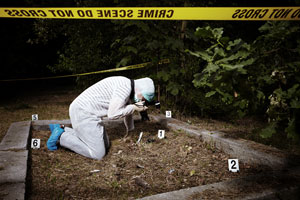
A crime scene, person taking photos for investigation

Entomologists as Expert Witnesses: Establishing Time of Death

Several experts were among the nearly 100 witnesses who testified for the prosecution in the quadruple murder trial of Kyle Flack in Franklin County, Kansas. While most of the experts provided the kind of medical and forensic testimony that is common to homicide prosecutions, one witness — an entomologist — testified in a field of expertise that less often plays a role in criminal trials.

Four Deaths

Flack was charged with murdering four people with a shotgun, including an 18-month-old girl. Two of the charges carry the potential for the death penalty.

According to prosecutors, Kaylie Bailey left her home with her 18-month-old daughter on the morning of May 1, 2013. Receipts and financial records established that she withdrew money from a bank, bought gas for her car, and purchased cheeseburgers and a kid’s meal from Burger King.

Bailey’s mother testified that she saw Bailey on the morning on May 1 and that Bailey planned to leave her daughter at the home of her boyfriend, Andrew Stout, while she went to work. Stout was also working but Bailey was apparently relying on Flack, who was staying with Stout, to watch her daughter.

Bailey was due at work at 11:00 p.m., but she did not appear. On May 3, Bailey’s employer reported her missing. That same day, Stout’s sister became concerned about her inability to contact Stout. She went inside Stout’s home and, since it was raining, closed the windows. She noticed a bad smell but did not see anything unusual in the home. The rooms were disordered but the house was typically messy. Police conducted four welfare checks in response to the missing persons reports, but they did not find anything amiss.

A few days later, a friend who was feeding Stout’s pets saw what appeared to be a hand when he peered through a crack in the cinder blocks of an outbuilding. Police discovered the body of Stout’s roommate beneath a tarp in the outbuilding. When they searched the home, they found the bodies of Stout and Bailey beneath a large pile of clothing in the master bedroom. Bailey’s arms were bound behind her back.

Prosecutors maintain that Bailey must have died on May 1 because her body was dressed in the same clothing she was wearing when her image was recorded on the bank’s surveillance video. A kid’s meal wrapper from Burger King was also found in the home’s kitchen.

On May 11, a sheriff’s deputy spotted a suitcase floating in an Osage County creek. The body of Bailey’s daughter was found inside the suitcase.

Experts Testify for Prosecution

The prosecution relied on the testimony of a number of experts to make their case against Flack. A forensic pathologist testified that Stout was shot five times. The roommate was shot twice while Bailey and her daughter were each shot once. The pathologist testified that they were all killed with a shotgun.

A firearms examiner linked at least eight of the nine shotgun shells recovered at the crime scene to a partial pump-action shotgun that was recovered from a garbage dump. Witnesses testified that Flack took a pump-action shotgun with him wherever he went.

Only the shotgun’s receiver and magazine were found in the dump. The firearms examiner testified that he “simulated” the barrel and stock by using inventory from the crime lab. Cross-examination of the expert focused on whether examining a “simulation” of a weapon, rather than a complete weapon, can produce an accurate result. The cross-examination also revealed that the first firearms examiner who studied the weapon concluded that the shells found at the scene could not have fired from the receiver that was recovered from the dump. The second examiner testified that the first examiner later withdrew that conclusion.

A forensic scientist specializing in DNA analysis testified that a few of Flack’s DNA markers were present on the receiver that was found in the dump. Other markers belonged to the victims or to dump employees who found the receiver. Two markers could not be identified.

Entomologist Determines Time of Death

In addition to the other forensic experts who helped reconstruct the crime, prosecutors turned to an entomologist. Stout’s body had substantially decomposed and partially mummified before it was found. The body was sitting upright near a heat vent. The warm environment attracted flies that laid eggs on the body’s face. When the body was discovered, it was covered with more than 100,000 maggots. Some of the skin on the face had been eaten away.

Neal Haskell, an international forensic entomologist consultant, used the temperature in the room and the nature of the insects (blow fly larvae) to determine an approximate time of death. He testified that Stout died between April 28 and April 30. Haskell testified that Bailey probably died between May 2 and May 5, although he agreed with the prosecutor’s suggestion that she might have died on May 1.

A forensic scientist specializing in bloodstain pattern analysis testified that the roommate’s body had been moved after he was killed. Based on samples collected from the roommate’s brain, Haskell testified that the roommate died between April 18 and April 20.

Guilty Verdict

Flack called no witnesses. After just three hours of deliberation, the jury found Flack guilty of all four murders. The trial will next proceed to the penalty phase, during which the jury will consider evidence in support of and in opposition to the prosecution’s request for the death penalty.

Haskell’s time-of-death evidence may be important to that determination. If all four victims had been killed at the same time, Flack would be in a position to argue that he acted in the heat of the moment. The time-of-death evidence suggests that Flack made deliberate decisions, in some instances separated by days, to kill each of the four victims. The jury may take that evidence into account when it decides whether the death penalty is warranted.

A man holding a gun

Expert Testimony Supports Negligent Homicide Jury Verdict

After deliberating for about seven hours, a jury found a Montana man not guilty of intentionally murdering his son. Instead, the jury found James Sindelar guilty of negligent homicide in his son’s shooting death. The jury may have based its verdict on the testimony of a defense expert who explained how Sindelar could have accidentally fired the fatal shot.

Murder Trial

There is no dispute that Sindelar, a 74-year-old resident of Ballantine, Montana, shot his 35-year-old son. The issue before the jury was whether Sindelar did so intentionally or accidentally.

The prosecution based its case on the testimony of Victoria Sidelar, the wife of James Sindelar’s son. She testified that Sindelar, who was living in a tent on family land that his mother had given to his son, came to their house to hand-deliver two letters. While he was there, Sindelar and his son got into a heated argument. Victoria Sindelar told the jury that her husband told his father to leave at least three times, eventually sticking a finger in his father’s face.

According to Victoria, James pointed a pistol at his son’s face during the argument. Victoria testified that her husband grabbed the barrel of the gun. Moments later, the gun discharged.

Sindelar testified that he brought the gun with him for protection. He said that his son was aggressive and described him as having a drinking problem. When he got to the house, his son started arguing with him and he felt threatened. He said he brought out the gun because his son was advancing on him and he wanted his son to stop. When his son bent over him and gripped the gun in both hands, the gun went off accidentally. Sindelar then called 911.

Sindelar’s Expert

The prosecution’s experts provided testimony that was consistent with what the eyewitnesses told the jury. A pathologist told the jury that Sindelar’s son died from a gunshot wound to the head. The shot was fired from a few inches away and traveled at an upward angle. Sindelar’s lawyer told the jury that the forensic evidence supported Sindelar’s testimony that his son was bending over him when the gun went off.

Another expert testified that Sindelar’s son had a high blood alcohol level. His 0.15{d61575bddc780c1d4ab39ab904bf25755f3b8d1434703a303cf443ba00f43fa4} blood alcohol concentration was well above the legal limit for driving.

The prosecution argued that Sindelar made an intentional decision to pull the trigger. Sindelar relied on the testimony of Roger Enoka, a professor in the department of medicine at the University of Colorado. Testifying as an expert witness, Enoka explained to the jury how the central nervous system can cause a hand to squeeze a trigger even if the person holding the gun has not formed a specific intent to shoot. Enoka based his testimony on studies he has made of involuntary muscle contractions.

Experts in involuntary muscle contractions often testify on behalf of police officers in civil and criminal cases when the officers are sued or prosecuted for shooting an innocent victim. Dr. Enoka’s research is frequently the basis for that testimony. The research has also influenced police training procedures by emphasizing the need for an officer to keep his or her finger outside of the trigger guard prior to forming an intent to shoot.

In Sindelar’s case, the expert’s testimony may have made the difference between the intentional homicide verdict that the prosecution sought and the negligent homicide verdict that the jury returned. The maximum sentence that Sindelar faces is 20 years in prison. Given Sindelar’s age, even a mid-range sentence for negligent homicide would have the same practical effect as a life sentence. The judge will be challenged to fashion a sentence that takes Sindelar’s age and the unintentional nature of his conduct into account.

Failure to Disclose Expert Opinions Leads to Dire Results

Expert witness opinions, perhaps even more than other evidence in a case, must usually be disclosed to the opposing party in advance of trial. In federal cases, disclosure is required by the procedural rules that govern civil and criminal trials. Most states have implemented similar disclosure requirements.

When lawyers fail to disclose expert opinions in advance of trial, bad things happen. Recent criminal and civil cases underscore the importance of making the required disclosure.

David Morgan Trial

In the State of Washington, David Morgan is charged with attempted first-degree murder, assault, and arson. Prosecutors are trying to prove that Morgan set fire to his home after dousing his wife with gasoline. Morgan’s lawyer told the jury that Morgan was trying to rescue his wife from the fire and that Morgan does not know how the fire started.

The Snohomish County fire marshal testified that he could not determine the fire’s point of origin. He said he could not rule out arson as the fire’s cause but that he found no physical evidence that would allow him to conclude that the fire was or was not deliberately set. Investigators did not find a gasoline can at the scene of the fire.

A second expert, however, came to a different conclusion. Mikael Makela, the Washington chapter president of the International Association of Arson Investigators, told the jury that he believes the fire resulted from arson.

Morgan’s attorney objected that the testimony came as a surprise. A pretrial order required the prosecution to disclose expert opinions to the defense before the expert testified. Morgan’s attorney believed that Makela shared the fire marshal’s opinion that the fire’s cause could not be determined. He therefore did not arrange for an expert of his own to review Makela’s opinion.

Makela testified that he advised the prosecutor of his opinion on several occasions before he testified. Because the prosecutor did not convey that information to the defense, the judge discharged the jury and declared a mistrial. The case could go to trial again after Morgan’s attorney obtains his own expert. The court will first need to decide whether to dismiss the charges based on the prosecution’s failure to obey the pretrial order.

Malibu Media Lawsuit

A copyright infringement lawsuit by Malibu Media against a defendant identified only as John Doe was recently dismissed by a federal magistrate in Chicago, in part because Malibu based its case on undisclosed expert opinions. Malibu, which produces and distributes erotic movies, claimed that John Doe illegally downloaded the movies from the internet without paying for the privilege of viewing copyrighted material.

Malibu relied on evidence provided by forensics investigators in Germany, who traced the improperly downloaded films to Doe’s IP address. Malibu admitted that the investigators could not find the movies on Doe’s computer, although it speculated that Doe might have found a way to erase them without leaving any traces. Doe denied downloading the movies and noted that his router had been accessed by an unknown device during the time that Malibu claimed he was downloading the material.

The court entered judgment against Malibu after ruling that the admissible evidence was insufficient to justify a trial. It disregarded expert evidence upon which Malibu relied upon because Malibu failed to make a timely disclosure of that evidence as required by a pretrial order. The court rejected Malibu’s contention that it was not required to disclose the evidence because its investigators were lay witnesses, not experts. The investigators relied upon knowledge of internet and computer technology that was beyond the knowledge possessed by most people and were therefore testifying as experts. The fact that Malibu’s lawyers touted their expertise during a court hearing also undercut the claim that the witnesses were not experts.

The Importance of Expert Opinion Disclosure

The lesson to be learned from the Morgan mistrial and the Malibu Media dismissal is that failing to disclose expert testimony can have dire consequences. It is easy to find examples of cases in which experts were not allowed to testify because parties did not adhere to the precise requirements of disclosure rules. Lawyers who work with expert witnesses should always be aware of disclosure rules and take care to comply with their requirements.

Hulk Hogan’s Experts Testify Against Gawker

[UPDATE] Hulk Hogan’s Experts Testify Against Gawker

UPDATE: The jury in Hulk Hogan’s trial evidently found his experts to be persuasive. After only six hours of deliberation, the jury awarded Hogan $115 million in damages and an additional $25 million in punitive damages. Readers might be interested in Peter Horan’s firsthand account of what it was like to serve as an expert witness for Gawker during the Hogan trial.


As the ExpertPages blog noted in June 2015, a blogger professed to be shocked by the fees that Hulk Hogan was paying an expert witness who assisted in his invasion of privacy lawsuit against Gawker. Now that the case has finally come to trial, Hogan can decide whether his expert is worth the money.

The Hulk Hogan Trial

Terry Bollea, known professionally as Hulk Hogan, sued Gawker under Florida law for invasion of privacy. Gawker, a website that brands itself as a “one-stop guide to media and pop culture,” specializes in celebrity gossip.

The lawsuit contends that Gawker violated Hogan’s privacy rights in 2012 by posting a video made in 2006 that shows Hogan having a sexual encounter with Heather Cole, the wife of his former friend Bubba “the Love Sponge” Clem. The video was recorded without Hogan’s knowledge or consent. Hogan’s lawsuit also alleges that Gawker earned profits to which it was not entitled by exploiting his public image.

Hogan’s invasion of privacy claim is based on a Florida law that prohibits the publication of “private facts.” Gawker contends that Hogan’s frequent public references to his sex life and his confession of infidelity in his autobiography have transformed conduct that is ordinarily private into a matter of public interest. Gawker argues that the video was part of a legitimate news story in light of public discussions of the sex tape that had been ongoing for months before Gawker posted it. Gawker maintains that it had a First Amendment right to report and to comment upon information that had captured the public’s attention.

Hogan’s lawsuit tests the line between an individual’s right to privacy and the media’s right to report the news. Given Hogan’s status as a public figure who, for many years, has welcomed publicity, the First Amendment plainly protects news reports and commentary concerning the contents of the video. Less clear is whether Gawker had the right to post the video itself.

The trial judge ruled that Gawker had no First Amendment right to post the sex tape, a decision that an appellate court will likely review if Hogan prevails. In the meantime, further investigation is needed to determine whether the tape revealed “private facts” or whether Gawker reported and commented upon newsworthy facts that were already in the public realm. Gawker contends that it merely “joined a conversation” that was already ongoing, while Hogan argues that the conversation did not include a video of his sexual activity until Gawker revealed it to the world.

Hogan’s Economic Experts

Hogan rested his case at the end of the first week of trial. He relied upon two experts to establish his economic damages. Shanti Shunn, a digital marketing strategist, testified that the sex tape was viewed 4.5 million times, not counting another 99,000 views on You Tube. About 2.5 million of those views occurred on the Gawker website.

Shunn testified that the Gawker site experienced a substantial spike in views immediately after posting the video. He admitted on cross-examination that he could not say whether the page views represented unique visitors or a lesser number of visitors who viewed the video multiple times.

Jeff Anderson, a director of valuation and analytics at a consulting firm that specializes in intellectual property, also testified that Gawker experienced a significant increase in web traffic after posting the video. He estimated that Gawker’s value increased by $15 million as a result of the additional traffic. Gawker is expected to challenge Anderson’s estimate of the company’s value when it presents its defense.

Hogan’s Liability Expert

The blogger who professed surprise that an expert could charge $250 per hour ($350 per hour for trial testimony) was referring to Mike Foley, a journalism professor at the University of Florida. Hogan’s attorneys relied on Foley to establish that the sex video was not newsworthy.

Foley testified that while Hogan’s conduct could be considered newsworthy, the video is “gratuitous” and should not have been posted to the website. He also testified that Gawker violated the Society of Professional Journalists’ Code of Ethics by posting it. The Code, however, includes a disclaimer that draws a distinction between ethics and newsworthiness. The disclaimer was apparently added to the Code in an effort to prevent the Code from being used as evidence against journalists in cases like Hogan’s.

Gawker’s attorney attacked Foley on two fronts during cross-examination. First, Foley conceded that publishers make difficult judgments about newsworthiness every day, and that what seems newsworthy (or, for that matter, offensive) to one person might be viewed in a different light by others. The cross-examination explored the newsworthiness of a variety of sex-related stories, from Magic Johnson’s HIV to the 1991 Vanity Fair cover that featured the photograph of a nude (and pregnant) Demi Moore.

The second line of attack focused on Foley’s credentials. Gawker’s attorney pointed out that Foley has not been a reporter for 43 years and hasn’t worked in a newsroom for 24 years. The cross-examination was designed to establish that Foley is out of touch with modern journalism, particularly internet journalism, which did not exist when Foley was a reporter. Whether the jury will believe that an academic cannot keep abreast of journalistic developments without practicing journalism remains to be seen.

Was Foley worth the fee that so shocked the blogger? Reviews are mixed. CNN reported that “Foley appeared flustered,” paused for long periods before answering questions, and struggled with his answers. The Hollywood Reporter suggested that “blistering” questions exposed the “faultiness” of Foley’s judgments. But media outlets may have reason to root for the media during their trial coverage. Hogan’s attorney said he was pleased with the testimony, but he can hardly be expected to say otherwise. In the end, the jury’s opinion will be the only one that matters.


(Photo Credit: “Hulk Hogan” by Mike Kalasnik is licensed under CC BY-SA 2.0.)

Election Experts Testify in Virginia Voter ID Case

Election Experts Testify in Virginia Voter ID Case

Laws requiring voters to show photo identification before their votes can be cast or counted are both politically and legally controversial. Last year, the United States Supreme Court declined to consider a challenge to a Wisconsin law that requires voters to produce a photo ID before they are allowed to vote. The Supreme Court’s inaction left in place a sharply divided federal appeals court decision that rejected a challenge to Wisconsin’s law. A few months later, a different federal appeals court ruled that Texas may not enforce portions of its voter ID law.

A lawsuit challenging Virginia’s voter ID law is underway. The plaintiffs, which include the Democratic party, are relying on expert testimony to support their challenge to the law. The defendants are countering with experts of their own.

The Voter ID Controversy

Proponents of voter ID laws argue that they are needed to combat voter fraud. Opponents of voter ID laws argue that voter suppression is the true motivation underlying the demand that voters produce a photo ID. They claim that voter fraud is a red herring and that disenfranchising voters who are poor, young, or disadvantaged — the groups who are least likely to have a valid photo ID — is the hidden purpose that the laws actually serve. That claim was recently endorsed by a conservative federal judge who has been persuaded by the evidence that photo ID laws have nothing to do with voter fraud and everything to do with politics.

As of January 2016, 36 states have adopted laws that require voters to show some kind of identification at the polls. Not all of those states, however, require a photo ID. The laws in 3 of the 36 states have been struck down by courts.

Election Experts Testify in Virginia

The plaintiffs in the Virginia suit contend that the voter ID law is intended to reduce the number of minority voters. Proponents had argued that the law is needed to curb voter fraud by impersonation, but a state senator testified that the law’s proponents could not point to a single case in which a Virginia voter had been arrested or convicted for impersonating another voter.

An expert testifying on behalf of the parties who are challenging Virginia’s voter ID law told the court that fear of voter fraud is not a rational justification for the law. The expert, Lorraine C. Minnite, is a professor of political science at Rutgers who has studied election fraud and vote suppression.

Minnite testified that the kind of fraud photo ID laws are meant to curtail is so rare that the number of legitimate voters who will be disqualified from casting ballots for lack of acceptable identification far exceeds the number of fraudulent voters who will be prevented from voting. Minnite conceded that voter fraud occurs, but contended that one voter impersonating another — the kind of voter fraud that photo ID laws target — almost never happens.

The defendants, state agencies and officials charged with administering elections in Virginia, countered with the testimony of two experts. Karen L. Owen, an assistant professor of public administration at Reinhardt University in Georgia, suggested that legitimate public policy concerns, rather than voter suppression, may have influenced Virginia’s legislators to enact the voter ID law. Even if voter impersonation is not a serious concern, she said, legislators may have been responding to the public perception that voter fraud is a problem, and enacted the law to increase voter confidence in the integrity of election outcomes.

Daniel J. Palazzolo, a professor of political science at the University of Richmond, agreed that the legislature may have enacted the voter ID law in response to public perceptions. He also suggested that legislators may have been influenced by activist groups that lobbied in favor of the law. Palazzolo testified that he could not rule out prejudice against minority voters as a motivating factor, but contended that there was insufficient evidence to prove that legislators passed the law because they wanted to suppress minority votes.

After all the trial testimony was completed, the presiding judge asked the parties to file written arguments. The last of those arguments is due in court in early April. Whether the judge’s decision will be influenced by the expert testimony presented on behalf of either party will not be known until the judge issues a decision.

Neuroscientific Evidence in the Courtroom

Neuroscientific Evidence in the Courtroom

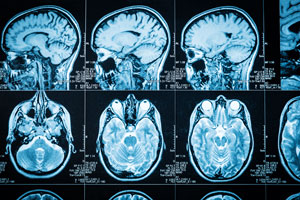
The increasing importance of neuroscientists as expert witnesses in death penalty hearings and other court proceedings is highlighted in a recent article in The Atlantic. The article calls attention to a Duke University study of more than 1,600 court decisions that addressed neuroscientific evidence between 2005 and 2012.

According to the Duke study, neuroscientists and related experts testify in about 5 percent of all murder trials and in 1 to 4 percent of all other felony trials. The experts are commonly used to provide mitigating evidence in an attempt to lesson a criminal defendant’s punishment, but neurobiological experts also testify regarding a defendant’s competency to stand trial or to plead guilty, as well as a defendant’s ability to give a voluntary confession when questioned by the police. Less frequently, they testify in support of insanity defenses and defenses based on a defendant’s inability to form the mental status (such as intentional conduct) required to commit the charged crime.

Neurobiology and the Law

The authors of the Duke study grouped neuroscience and behavioral genetics together under the umbrella of neurobiological evidence. The fields of neuroscience and behavioral genetics are increasingly linked as researchers discover that neither a purely genetic nor a purely neuroscientific approach are adequate to explain the biological components of human behavior. In fact, understanding the “pathways between gene, brain, and behavior” may require an interdisciplinary approach that “requires expertise in genetics, neuroscience, psychology, and psychiatry.”

Criminal defense lawyers are turning to neurobiological evidence to explain a client’s criminal behavior. One example links a gene known as MAOA (Monoamine Oxidase A) with antisocial behavior. The gist of the defense is that a criminal defendant should not be held responsible for behavior that results from biology rather than choice. Experts assist lawyers in presenting that defense through MAOA genotyping and neuroimaging.

The use of neurobiology in criminal defense has sparked debate among experts and non-experts alike. If people are truly not responsible for criminal behavior, why should they be punished for their conduct? Neurobiology arguably undermines the retributive foundation for the criminal justice system.

At the same time, prosecutors have used neurobiology to argue that the safety of society requires that criminals who have a genetic or neurologic propensity to behave violently should receive longer sentences. They have contended that the need to protect society trumps the question of personal responsibility for lawless behavior.

Debating Free Will

The debate about the role that neuroscience should play in criminal law falls within a larger scholarly debate about whether free will actually exists. Many neuroscientists conclude from experimental data that the subjective sense of free will is an illusion. They argue that behavior is determined by physical and biological laws, not by individual choice. If that is true, the deterrent value of criminal punishments may be nonexistent.

Scientific evidence notwithstanding, those conclusions are unpopular with a large majority of people who prefer to believe that they make rational or moral decisions about how to behave. The deterministic approach of neuroscience arguably undermines not only criminal law, but moral codes and a good bit of philosophy since the age of Aristotle. If people should not be held responsible for behavior that is not the product of free will, doesn’t that give bad people (or even good people) an excuse to misbehave?

The Future of Expert Testimony

While the authors of the Duke study found that attempts to introduce neurobiological testimony in criminal trials have been relatively unsuccessful, the study also found that attempts to introduce expert neurobiological evidence have been “more successful than most scholars believe.” At least with regard to some claims that criminal defendants raise, “testimony by an expert on the matter may serve as powerful evidence that impacts the outcome of the case for the defendant.”

While neurobiological evidence is used in the sentencing phase of capital cases, it is more often introduced to mitigate punishment in serious felonies that do not involve the death penalty. Since sentencing hearings take place after guilt has been determined, the rules of evidence governing the admission of expert testimony are often more relaxed than those that govern evidence during the guilt phase of a trial.

More controversial is whether to allow expert neurobiological testimony in an effort to persuade a jury that a defendant did not commit the charged offense. When, for example, a crime requires proof that a defendant acted intentionally, a neurobiologist might conclude that the defendant was incapable of forming the specific criminal intent that the law requires. To the extent that experts are allowed to render such opinions, juries commonly reject them.

Still, expert testimony from neuroscientists can make a difference. The Duke study, which defined neurobiological evidence broadly to include not just brain scan results and biomarker examinations but also the results of neuropsychological testing, found that the evidence makes a difference in 20 to 30 percent of cases in which it is admitted.

Measuring the impact of neuroscientific evidence is nevertheless difficult. A jury that acquits a defendant or decides not to impose the death penalty may have done so even in the absence of the expert evidence. Appellate courts have reversed convictions and remanded for new hearings or trials because neuroscientific evidence was improperly excluded (or because the defense attorney failed to present it), but the result after the new trial or hearing may turn out to be the same.

Given the gaps in knowledge about the connection between the brain, genetics, and criminal behavior, not all neuroscientists agree that expert neurobiological evidence should play a role in the courtroom. Notwithstanding that controversy, as scientific analysis becomes increasingly sophisticated, experts in neuroscience are likely to play a larger role as witnesses in criminal trials.