Author Archives: T.C. Kelly

About T.C. Kelly

Prior to his retirement, T.C. Kelly handled litigation and appeals in state and federal courts across the Midwest. He focused his practice on criminal defense, personal injury, and employment law. He now writes about legal issues for a variety of publications.

Lab Analysts May Be Required to Testify in Person in Criminal Trials

Lab Analysts May Be Crossed Examined

Does a criminal defendant have a constitutional right to cross-examine experts who prepare reports that other prosecution experts rely upon as evidence in a criminal trial? That question has been presented to the Wisconsin Supreme Court for resolution.

Rozerick Mattox was charged with reckless homicide for supplying heroin to a drug user who allegedly died from a heroin overdose. During Mattox’s trial, a medical examiner who conducted an autopsy gave expert testimony about the alleged victim’s cause of death. Basing her opinion in part on a toxicology report prepared by an out-of-state laboratory analyst, the medical examiner concluded that the alleged victim died from a heroin overdose.

Experts typically rely upon reports or analyses that are prepared by other experts. The lab analyst who prepared the toxicology report did not testify at Mattox’s trial. The issue with which Wisconsin’s appellate courts are struggling with is whether Mattox was deprived of his constitutional right to confront an expert witness when that witness prepared a report but did not testify (and thus could not be cross-examined) during the trial.

Medical Examiner’s Testimony

Dr. Zelda Okia performed the autopsy on the deceased drug user. She testified that certain physical findings, including a pulmonary embolism, cerebral edema (swelling of the brain), and the elevated weight of the lungs, were consistent with a drug overdose. Those symptoms could have been produced by an overdose of drugs other than heroin. She also saw more than a dozen needle marks on the deceased’s arm.

Dr. Okia also testified that she collected various fluid samples and sent them to St. Louis University for a toxicology analysis. Dr. Okia told the jury that the county medical examiner’s office had used St. Louis University for many years because its laboratory was accredited and was run by a board certified toxicologist. She testified that she was satisfied with toxicology reports that the laboratory had prepared in the past.

The toxicology report indicated that a fatal level of morphine was present in the fluids. Heroin, among other opiates, metabolizes into morphine. The toxicology report also identified the presence of a metabolite that is specific to heroin. Dr. Okia concluded from the report that heroin, rather than some other opiate, caused the drug user’s death.

Hearsay and Expert Reports

Mattox was charged with murder on the theory that he supplied heroin to the deceased drug user. If the death was caused by the drug user’s ingestion of some other opiate that the drug user obtained from a different source, Mattox would have been entitled to an acquittal. The issue of whether heroin, as opposed to another opiate, caused the drug user’s death was therefore critical to Mattox’s conviction.

Mattox’s attorney objected that the toxicology report was hearsay. Applying a common hearsay exception, the trial judge ruled that the report was admissible because it contained “facts or data” that was “of a type reasonably relied upon by experts in the particular field in forming opinions or inferences upon the subject” of the expert’s testimony. The judge also ruled that the toxicology report was not offered to prove that Mattox delivered heroin to the deceased but was received only for the limited purpose of explaining how the medical examiner formed her opinion.

The trial court’s reasoning is problematic. It is true that the toxicology report was not offered to prove that Mattox supplied heroin to the deceased drug user. It seems evident, however, that the report was offered to prove that the drug user died of a heroin overdose. In the absence of the toxicology report, Dr. Okia had no basis for determining whether heroin, as opposed to some other opiate, caused the drug user’s death. Since proving that heroin caused the drug user’s death was critical to the charge that Mattox committed reckless homicide, the toxicology report was not used for a “limited purpose” but as substantive evidence of Mattox’s guilt.

Whether or not the toxicology report was admissible as an exception to Wisconsin’s hearsay rule, the larger question is whether the author of the report should have been required to testify so that the opinions expressed in the report could have been subjected to cross-examination. The answer to that question is governed by United States Supreme Court cases that address the Confrontation Clause.

Confrontation of Expert Witnesses

The United States Constitution guarantees criminal defendants the right to face-to-face confrontation of witnesses who make testimonial statements. A statement is testimonial if it is given with the expectation or understanding that it might be used as evidence in court.

The toxicologist at St. Louis University who prepared the laboratory analysis was certainly aware that it might be used as evidence in a criminal trial. Two Supreme Court cases establish that a lab report is testimonial and is therefore inadmissible as evidence to establish an element of a crime unless the analyst who prepared the report testifies and is subject to cross-examination.

The medical examiner in Mattox’s case relied upon evidence other than the lab report to conclude that Mattox died from a drug overdose. Mattox’s conviction, however, depended on evidence that Mattox died from using the heroin that Mattox supplied, rather than some other opiate that someone else may have supplied. The critical evidence in support of that element of the offense was supplied by the lab report, not by the medical examiner’s independent observations. The lab report therefore seems to fit the definition of testimonial evidence.

The Wisconsin Court of Appeals noted a conflict in its own precedent regarding the admissibility of lab reports when the expert who prepared the report did not testify. The court’s prior cases seemed to draw a distinction between an expert who relied entirely upon a lab report to establish cause of death and an expert who considered a lab report as one piece of evidence to support a conclusion as to cause of death. Whether that distinction is consistent with United States Supreme Court precedent is unclear.

Bringing Lab Analysts to Court

The Wisconsin Court of Appeals wants to punt Mattox’s case to the Wisconsin Supreme Court, which is better situated to resolve the conflict in Wisconsin precedent. If the court agrees to review the case, it will need to decide whether laboratory analysts must provide expert testimony in person in cases like Mattox’s. If so, the cost of criminal trials will increase, since prosecutors may need to bring out-of-state analysts to court to testify as experts.

That increased cost may be a small price to pay to preserve the constitutional right to cross-examine testimonial witnesses. Since there have been cases across the country in which lab analysts have turned out to be unqualified to render objective expert opinions, it cannot be said that cross-examining a lab analyst is necessarily a meaningless exercise. Whether the Wisconsin Supreme Court will accept the case and, if so, how it will rule, may not be known for several months.

Court Declines to Allow Elizabeth Smart to Testify as an Expert in Kidnapping Case

Court Declines to Allow Elizabeth Smart to Testify as an Expert in Kidnapping Case

Elizabeth Smart, an ABC News contributor who describes herself as an activist for victims of predatory crimes, will not be allowed to testify as an expert witness in a California kidnapping case. Smart gained national attention when she was abducted from her home in Salt Lake City at the age of 14. She was rescued nine months later.

The Orange County district attorney wanted Smart to explain why the alleged victim in the kidnapping case did not escape when she had the chance. Although Smart testified outside the presence of the jury that she experienced a similar ordeal, the judge ruled that Smart’s anecdotal experience did not qualify her to testify as an expert.

Orange County Kidnapping Trial

Isidro Garcia is accused of kidnapping the 15-year-old daughter of his former girlfriend in 2004. The alleged victim, who is now 26, testified that Garcia began to touch her inappropriately at the age of 14 and threated to call immigration authorities if she told her mother about his conduct. She also testified that Garcia forced her to leave her home, held her captive for 10 years, and made her marry him and bear his child.

Prosecutors contend that Garcia changed identities and moved his wife and child frequently in order to conceal his crime. Garcia’s wife said she was rescued after contacting her sister on Facebook in 2014.

The defense contends that the alleged victim left her home willingly because she was quarrelling with her mother. According to the defense, the alleged victim lived with and married Garcia voluntarily, and was happy with their relationship until shortly before she contacted her sister. Garcia’s defense attorney attributes the accusation to the fact that Garcia’s wife wanted out of a relationship that had become troubled.

Neighbors have reported to the press that Garcia and his wife seemed to be a happy couple. They threw parties and danced together. Neighbors saw no evidence that Garcia’s wife, who had her own car and job, was being abused or confined.

Elizabeth Smart’s Proposed Expert Testimony

The strongest argument in support of the defense is that the alleged victim had ample opportunity to flee over the course of ten years but chose to stay. That evidence suggests that she was not kidnapped and held captive, as the prosecution claims.

Prosecutors contend that the alleged victim may not have been physically restrained by Garcia, but was “mentally his captive.” The alleged victim testified “that for a decade she felt an underlying fear that Garcia would beat her, separate her from her child and arrange for her deportation.”

Prosecutors wanted to call Elizabeth Smart to testify about the reasons the alleged victim might have stayed with Garcia. During a hearing held outside the jury’s presence, Smart noted parallels between her own experience and the testimony given by Garcia’s wife. A key difference in the cases, however, is that Smart was rescued after nine months while Garcia’s wife stayed with him for ten years.

Smart told the court: “Those threats to me, they were very real to me. That’s why I didn’t run, and I can only say that that’s the same reason that this victim didn’t run either.” Unfortunately for the prosecution, Smart’s proposed testimony amounted to little more than speculation that the alleged victim’s reason for staying with Garcia must have been the same as her own reason for staying with her kidnapper.

The judge ruled that Smart’s proposed testimony lacked foundation. In other words, she had no basis for testifying that Garcia’s wife stayed with Garcia for the same reason that Smart stayed with her kidnapper. Smart was not qualified to testify as an expert because she did not base her opinion on studies, psychological profiles, or other evidence (beyond her own anecdotal experience) that would have supported her opinion. Smart’s testimony would have amounted to “she says she was afraid and I believe her because I was afraid too,” but deciding whether a witness is telling the truth is the function of the jury, not of other witnesses.

Stockholm Syndrome and Expert Testimony

It may have been possible for prosecutors to support their case with expert testimony. Victims in the position of Garcia’s wife are sometimes said to have suffered from Stockholm syndrome. Also known as capture-bonding, Stockholm syndrome occurs when hostages learn to identify with and become dependent upon their captors.

Expert witnesses have testified about Stockholm syndrome in a number of cases, including the defense of Patty Hearst. Widespread (although less than universal) acceptance of the syndrome opens the door for expert testimony to explain why a kidnapping victim might not take advantage of escape opportunities.

Had the prosecution offered to present the testimony of a psychologist who had studied Stockholm syndrome and who could apply the diagnostic criteria for that condition to the alleged kidnapping victim in the Garcia trial, the court might well have agreed to allow the expert to testify. Since Elizabeth Smart could not provide that kind of testimony, the prosecution lost its bid to educate the jury with expert evidence.


Photo Credit: “Elizabeth Smart Speaks About Overcoming Trauma” is licensed under CC BY-SA 2.0.

Blood-Splatter Expert Testimony Challenged in Murder Trial

Blood-Splatter Expert Testimony Challenged in Murder Trial

An Australian blood-splatter expert telephoned the defense attorney in the Pennsylvania murder trial of Jessica Alinsky because he was shocked by the opinions expressed by a state police trooper who was testifying as a forensics expert. Dr. Mark Reynolds knew about the Alinsky case because the trooper based a presentation on the crime scene evidence while attending a blood-splatter training course that Reynolds taught. According to Reynolds, the trooper would have failed the course if he had been graded on that presentation alone.

Unfortunately for Alinsky, the defense only learned of Dr. Reynolds’ opinion after the trial was underway. The defense moved for a mistrial to give Dr. Reynolds, who was in Australia, time to familiarize himself with the case and to testify as an expert witness. After the judge denied that motion, Alinsky was convicted of third degree murder.

Expert Evidence in Jessica Alinsky’s Murder Trial

Matthew Ryan Gailie, a prison guard, was shot in the head soon after he returned home from work. Prosecutors claimed that his girlfriend, Jessica Alinsky, shot him at close range and then manipulated the murder scene to make it appear that he had committed suicide. Alinksy gave multiple explanations of the shooting to the police, attributing it both to an accident and to suicide. In one version, she said she was upstairs when she heard the shot. At other times, she said she was next to Gailie when the gun went off during a struggle. Alinksy did not testify during the trial.

Gailie’s body was found on the living room floor with a gun in his hand. The gun was in Gailie’s left hand, but Gailie was right-handed. The strongest expert evidence against Alinksy came from forensic pathologist Gary Ross, who testified that people who use a gun to commit suicide usually drop the gun.

The trial began with the expert testimony of Trooper John Corrigon. He concluded that a blood soaked bank statement found next to Corrigon’s body had been planted by Alinsky to suggest a motive for the suicide. He did not believe that a bloody handprint on the back of the statement could have been Gailie’s, because Gailie would have been immediately incapacitated by the shot. He also expressed the opinion that the gun was in the wrong position for Gailie to have fired it.

Based on the substantial amount of blood found on the couch, Corrigon testified that the body had been there for some time. He suggested that blood on Gailie’s leg appeared to be “defying gravity,” creating the appearance that Gailie had first fallen on the couch before being rolled to the floor, causing blood to spray onto the floor under the kitchen table.

Corrigon attributed smears of blood on Gailie’s body to Alinsky’s attempt to clean up the evidence. Using a special dye, police also found evidence of bloody female footprints leading to the bathroom, as well as blood in the bathtub that had been cleaned before the police arrived.

Another forensic expert testified that neither Gailie’s nor Alinsky’s hand tested positive for gunshot residue. Both individuals had traces of gunshot residue components on their bodies, but the expert acknowledged that she could not determine who fired the gun based on that evidence.

Reynolds’ Comments

Corrigon used his analysis of blood-spatter evidence in Alinsky’s case when he made a presentation in the course that Reynolds taught. In an email to the defense attorney, Reynolds said that “in almost every instance there was no underpinning scientific support for what he was saying and/or there was a reasonable alternative(s) supportive of self-infliction.”

Reynolds also recalled that Corrigon “made a number of significant concessions and essentially agreed that there was just as much likelihood of it being self-inflicted as it was a homicide.” Those concessions were not reflected in Corrigon’s courtroom testimony.

After the defense became aware that Reynolds had criticized Corrigon’s analysis, the defense recalled Corrigon as a witness. Corrigon admitted that he wrote no report about the professional criticism, but contended that he was not required to do so. The defense contends that Corrigon concealed exculpatory evidence and that the prosecution had a duty to disclose it.

Reynolds also suggested that Corrigon’s conclusions were influenced by other evidence in the case, including Alinsky’s statements. In a telephonic hearing conducted during a break in the trial, Reynolds told the court that a science expert should base conclusions strictly on science. Taking other evidence into account is the jury’s job, not the expert’s.

Grounds For Appeal

The jury took only two hours to find Alinsky guilty of third degree murder and of tampering with evidence. The jury might have come to the same conclusion even without Corrigon’s testimony, given the conflicting statements that Alinksy made to the police and the other evidence that pointed to her guilt.

It is likely, however, that Alinksy will raise at least two grounds on appeal that might result in a new trial. The first is the judge’s decision not to grant a mistrial, which effectively prevented Alinsky from presenting Reynolds’ expert testimony. That testimony might have given the jury a basis for discounting the conclusions drawn by Corrigon.

Alinsky is also likely to argue that Corrigon had a duty to reveal Reynolds’ professional criticism of his analysis and that the prosecution had a duty to disclose that criticism to the defense. Whether either ground for appeal will result in a new trial for Alinksy will probably not be known for more than a year.

Court Dismisses Expert Witness Lawsuit Against Professional Association

Court Dismisses Expert Witness Lawsuit Against Professional Association

Expert witnesses typically belong to professional associations. Their memberships may enhance their credibility when they testify in court. Many of those organizations have established rules that members must follow if they wish to remain in good standing with the association. Some groups have developed rules that govern members who testify as experts.

A case arising in Texas demonstrates the risks associated with disobeying rules that address expert testimony. A recent decision of the United States Court of Appeals for the Fifth Circuit affirmed the dismissal of an expert’s lawsuit against a professional organization that censured the expert for violating a rule governing the conduct of expert witnesses.

Facts Pertaining to the Case

Dr. Jay Barrash regularly testifies as an expert witness in the field of neurosurgery. Hired as an expert witness in a medical malpractice case, Dr. Barrash testified in a deposition that the defendant surgeon had incorrectly placed a bone graft during a patient’s surgery and failed to treat a post-operative infection.

After settling the case, the defendant surgeon filed a complaint with the American Association of Neurological Surgeons (AANS). The complaint alleged that Dr. Barrash violated the AANS Rulesfor Expert Opinion Services by failing to provide impartial testimony, failing to review all pertinent medical information, and failing to allow for differing medical opinions. The complaint also alleged that Dr. Barrash was unqualified to testify and that he charged excessive fees to provide expert witness services.

After holding a hearing, an AANS committee agreed that Dr. Barrash was entitled to criticize the defendant surgeon’s post-operative care. The committee apparently rejected the surgeon’s complaints about Dr. Barrash’s qualifications and fees.

The committee ruled, however, that Dr. Barrash did not review all pertinent medical records before testifying because he failed to examine an available X-ray. The committee also concluded that Dr. Barrash failed to provide unbiased testimony. The committee recommended that Dr. Barrash be suspended from AANS membership for six months. After Dr. Barrash appealed, the AANS Board of Directors downgraded the suspension to a censure. The censure decision was upheld by the membership at large.

There is always a risk that members of a professional organization will be resentful when one of its members testifies against another of its members. Whether that happened here is unclear, but it is clear that Dr. Barrash was unhappy with the association’s disposition of his case.

Dr. Barrash resigned from AANS and sued the association in federal court, alleging (among other claims) that he was denied due process because he was not given adequate notice of the charges. The district court agreed that Dr. Barrash was not given notice of how he allegedly failed to give unbiased testimony. The district court ordered the expungement of that allegation from the censure.

The district court upheld the AANS’ resolution of the charge that Dr. Barrash failed to consult pertinent medical records before testifying. It also rejected Dr. Barrash’s claim that the AANS failed to follow its bylaws and therefore breached its contract with him. Dr. Barrash appealed.

The Decision on Appeal

Dr. Barrash based his lawsuit on claims that arise under Texas law. The court of appeals noted that Texas courts give a great amount of deference to the internal operations of voluntary organizations like the AANS. Notwithstanding that deference, Texas law does require voluntary organizations to provide due process when the organization takes an adverse action against a member.

The most fundamental due process rights are the right to be informed of the accusation and the right to be heard in response. The AANS gave Dr. Barrash a copy of the letter in which the surgeon accused him of testifying without reviewing intraoperative X-rays that allegedly showed proper bone graft placement. The X-rays were available for Dr. Barrash’s inspection at the hearing and Dr. Barrash did not ask to see them in advance. The court of appeals concluded that the AANS gave Dr. Barrash adequate notice of the charge and did not violate his due process rights with regard to that charge.

Dr. Barrash also argued that he did not review the X-rays because they were not pertinent to his testimony. The court of appeals declined to review that claim, which would have required it to substitute its own judgment for the professional conclusions drawn by a committee of neurologists who were better situated to decide the question.

Finally, Dr. Barrash contended that the AANS failed to follow the procedural requirements of its own bylaws during his disciplinary proceeding. He argued that the bylaws constituted the terms of a contract with its members and that AANS therefore breached its contract. The court of appeals concluded that Texas law does not provide a contract remedy for a voluntary organization’s failure to abide by its bylaws. While voluntary organizations must provide basic due process, bylaw provisions that exceed that basic duty are not enforceable in a breach of contract action under Texas law.

In the end, Dr. Barrash learned that courts (at least in Texas) provide limited recourse when a professional organization has disciplined a member. Since professional discipline can often be used against an expert witness during cross-examination, experts should always take care to understand and to follow any rules for expert testimony that have been created by the professional associations to which they belong.

Fitness Tracking and Expert Testimony

Fitness Tracking and Expert Testimony

Health conscious Americans are using a variety of new tools to help them measure their fitness. Activity monitors, including Fitbit, Jawbone UP, and Nike Fuelband, keep track of heartbeats, body temperature, the number of steps a user takes, and other data. Some smartwatches record similar data. Measurements of time and distance (assisted by GPS components) allow fitness monitors to compute the speed at which the person wearing the device has been walking or running.

Fitness technology users often have the option to upload the information collected by their devices to an online database. That allows them to keep track of their activity over time. It also permits a comparison of the user’s information to a broad group of people who share similar characteristics (such as age and gender).

The advent of fitness technology has given rise to a new breed of experts. Statisticians are using fitness monitoring data to compare individuals to larger populations. In some cases, they are using data gained from technology users when they testify as expert witnesses.

Experts in Activity Analysis

The first court case involving the expert analysis of data collected from a Fitbit device took place in Canada. A personal injury plaintiff who was injured when she was working as a fitness trainer used expert testimony to establish that her activity levels were lower than average for a person of her age and profession.

Of course, a plaintiff who is malingering might deliberately engage in lessened activity while wearing the Fitbit device. The expert’s data analysis might therefore shed limited light on whether an individual user’s data has been manipulated. The Canadian court presumably left that issue for the jury to resolve.

Whether an activity data analysis would be permitted in an American court would likely depend on whether the party seeking its admission can satisfy the standard for expert evidence that applies in that court. In states that adhere to the Daubert standard, the party would need to establish that the expert’s testimony is based on the application of a reliable methodology to reliable data. The reliability of data that can be manipulated by the person wearing a monitor might be difficult to prove.

While plaintiffs might have trouble using an activity analysis to prove their injury claims, activity data might be a boon to insurance companies that seek to expose fraudulent claims. A plaintiff who claims a serious injury might have difficulty explaining an analysis of Fitbit data showing that the plaintiff is more active than an average person of a similar age. Activity data might also show that a plaintiff who claims to be disabled goes jogging every day. Of course, a savvy individual who wants to make a false insurance claim might know better than to wear a smartwatch or to upload Fitbit information to a database.

Data-Driven “Truth”

As courts increasingly become aware of the perils of eyewitness identification, they may see technology as a means to increase the reliability of evidence that juries consider. Yet raw data is nearly always subject to human interpretation provided by expert witnesses.

As one commentator notes, courts should understand that a “data-driven regime of truth” can be just as unreliable as eyewitness testimony. Some monitoring devices record arm movements as walking when the wearer is sitting in a chair while writing or eating. Others fail to record cycling as an activity. The algorithms that data analysis experts use to interpret the raw data may be flawed, while the data uploaded by people who use fitness trackers may not be representative of the population as a while.

Courts that apply a Daubert rule will presumably examine the reliability of data assessments made by expert analysts. Juries may also hear testimony from competing experts pointing out the problematic nature of data-driven evidence. In the end, however, expert opinions based on fitness tracking technology is likely to become increasingly common in the courtroom.

Art Experts Gather for Fraud Trial in Manhattan

Art Experts Gather for Fraud Trial in Manhattan

Art experts from around the world are gathering in a federal courtroom in Manhattan to testify in a case alleging that a prominent New York gallery fraudulently sold forged art. The lawsuit involves a painting of black and red rectangles, attributed to Mark Rothko, that was actually painted by a Chinese immigrant in Queens. The gallery, Knoedler & Company, sold the painting in 2004 to Domenico and Eleanore De Sole for $8.3 million. The gallery closed its doors after it was flooded with lawsuits and is now in the hands of a holding company.

The De Soles are seeking $25 million in damages. A key issue in the trial is whether the gallery or its director, Ann Freedman, were aware that the Rothko was a fake when Knoedler sold it to the De Soles.

Allegations of Fraud

Over the course of 15 years, Knoedler sold about 30 forged paintings that were attributed to abstract artists, including Pollock, de Kooning, and Rothko. Collectors paid about $63 million for the combined works. The forgeries were supplied to Knoedler by Glafira Rosales, a Long Island art dealer who claimed she acquired them from art collections in Zurich and Mexico City.

Rosales was convicted of several fraud charges in 2013. The forger, who fled to China, told an interviewer that he was not paid significant sums for the works and did not know that they were being resold as originals.

During the first week of trial, Domenico De Soles testified that he based his decision to purchase the Rothko on the gallery’s reputation for honesty and made no significant effort of his own to authenticate the painting. He said he also received a letter from Freedman stating that the Rothko had been viewed by eleven individuals “with special expertise on the work of Mark Rothko,” including art historian Irving Sandler and Rothko’s son. The De Soles took the letter as verification of the painting’s authenticity, while Freedman’s lawyer made the point that the letter said “viewed” rather than “authenticated.” The jury might think that Freedman’s lawyer is splitting hairs if it regards the letter as implying that none of the art experts who viewed the painting had doubts about its origin.

The De Soles allege that Freedman and the Knoedler gallery knew the painting was forged, or deliberately disregarded evidence that the painting was not authentic. According to the De Soles, Freedman should have realized the Rothko was a forgery when she was able to purchase an $8.3 million painting from Rosales for $950,000.

Freedman argues that she purchased art from Rosales for her own collection, including a $280,000 Pollock, without realizing that she was buying forgeries. The De Soles’ lawyer contends that Freedman purchased the forged works for herself as a promotional device and to bolster her credibility with customers.

The lawsuit will hinge on proof that Freedman knew, or at least suspected, that the Rothko was a fake. If she concealed such knowledge or suspicions from the De Soles, the jury would have a basis for concluding that she acted fraudulently.

Expert Testimony

Among the experts called in the first week of trial, Dana Cranmer, the former conservator for the Rothko Foundation, testified that he was unaware that Freedman used his name in the letter that was sent to the De Soles. He was uncertain whether he ever saw the painting that was sold to the De Soles, although he recalled looking at a Rothko in Freedman’s office for five or ten seconds. He testified that he did not authenticate it because “that’s not what conservators do.” His expertise is in preserving paintings rather than authenticating them.

Rothko’s son also testified that he did not know Freedman included his name in her letter. He denied that he has ever authenticated any of his father’s paintings. Another person named in the letter, Rothko expert David Anfam, said he had only seen transparencies of the painting, not the original. He also denied authenticating the painting. Anfam admitted, however, that he placed another Rothko forgery in an exhibition, believing it to be authentic.

Other experts who are likely to contribute important testimony during the course of the trial include art appraisers and forensic accountants. James Martin, a paint analysis expert who initially determined that the Rothko and other paintings that Rosales sold to Knoedler were fakes, is expected to explain how the forgeries could have been detected.

Freedman initially maintained that Martin’s scientific analysis was faulty but dropped that assertion after the forger was identified. Freedman now bases her defense on the claim that she relied on experts who authenticated the forged Rothko before she purchased it. The testimony of those experts will be central to her claim that she was duped.

Robert Wittman, founder of the FBI Art Crime Team before beginning a career in private art security, is also expected to testify as an expert on Freedman’s behalf. The extent to which he will be allowed to express opinions about the relative responsibilities of the De Soles and Freedman to research the painting’s origin remains a point of contention.

Shining a Light

Expert testimony serves to educate the jury, but broader audiences are often interested in what experts have to say. According to artnet News, the “parade of experts and insiders expected to take the stand in the coming weeks” will likely “shine a light into the often murky and secretive practices surrounding high-stakes art sales.”

In addition to opening a window to the art world, the trial may answer questions about the ability of art experts to authenticate paintings. If, as Freedman claims, experts told her that the Rothko was real, art buyers need to be concerned that customary art authentication procedures may be inadequate to protect their investments.

Expert Opinion Excluded from Evidence in Lipitor Case

Expert Opinion Excluded from Evidence in Lipitor Case

A number of individuals have filed federal lawsuits alleging that their use of the cholesterol-lowering drug Lipitor caused them to develop Type 2 diabetes. The lawsuits have been consolidated in a federal district court in South Carolina.

When large numbers of cases are consolidated in one court under federal rules governing multidistrict litigation, a single case is chosen for trial. That case, known as the “bellwether,” is chosen because it is representative of the other cases awaiting trial. The outcome of the bellwether case may encourage settlement of the remaining cases. It also helps the other litigants assess the risks and costs of taking their cases to trial.

Products liability cases against drug manufacturers necessarily hinge on expert testimony. The judge presiding in the multidistrict Lipitor litigation recently concluded that one of the expert witnesses designated by the plaintiffs in the bellwether case would not be allowed to testify that Lipitor causes Type 2 diabetes.

The Hempstead Case

Juanita Hempstead’s case was chosen as the bellwether. Hempstead was given a prescription for Lipitor in March 1998. She started taking it in June 1999 but did not take it consistently until July 2000. Her lipid levels (including her level of total cholesterol) were higher than normal before she began regular use of Lipitor. Her blood glucose level was normal when it was tested in 1999.

In 2002, Hempstead’s lipid levels were normal. Her glucose level, however, was abnormal. It was in a range that is classified as pre-diabetic. In 2003, Hempstead stopped taking Lipitor for three weeks because she was experiencing abdominal pain. At the end of the three weeks, her lipid and glucose levels were higher than they were in 2002. She resumed use of Lipitor and, three months later, her lipid levels returned to normal.

In February 2004, Hempstead was hospitalized for colitis. Her glucose reading at that time was in the diabetic range. Three months later, her glucose level was substantially higher and she was diagnosed with new-onset diabetes. Hempstead’s weight apparently increased steadily between 1998 and 2004.

Causation

Hempstead was required to prove both general and specific causation. To prove general causation, she needed evidence to establish that Lipitor is capable of causing diabetes. To prove specific causation, she needed evidence that Lipitor actually caused her diabetes.

The district court took note of cases that require no proof of specific causation if studies of general causation establish that taking a drug at least doubles the risk of sustaining the injury for which the plaintiff is suing. Those cases hold that if most people who take a drug experience the harm that the plaintiff experienced, no additional proof of causation is necessary, at least if the plaintiff’s characteristics and use of the drug were similar to those of the subjects who participated in the study that established the risk.

Studies cited by Hempstead’s experts established that taking Lipitor increases the risk of developing diabetes by a factor of 1.6. Since that is less than a doubling of risk, Hempstead was required to prove that Lipitor actually caused her diabetes. She relied on Dr. Elizabeth Murphy to prove specific causation.

Daubert Analysis

The court based its decision on Rule 702 of the Federal Rules of Evidence, as interpreted by the Daubert decision. That rule requires the trial judge to assure that an expert’s testimony will be both relevant and reliable. The reliability of scientific opinions is measured by whether the expert reasonably applied reliable principles and methods to sufficient facts or data.

The court noted that in its role as gatekeeper, it must not substitute its own view of expert opinions for the view that a jury could reasonably take. At the same time, the court has an obligation to protect the integrity of the jury’s decision by assuring that expert evidence, which has the potential “to be both powerful and quite misleading,” is based on a reliable methodology.

Dr. Murphy is a Professor of Clinical Medicine and the Chief of the Division of Endocrinology at San Francisco General Hospital. She has an M.D. from Harvard and a Ph.D. in biochemistry from Oxford. Her credentials to testify as an expert were clear, so the question was whether her opinion that Hempstead’s diabetes was caused by Lipitor was rooted in a reliable methodology.

The court characterized Dr. Murphy’s opinion as being based on (1) the fact that Lipitor increases the risk of diabetes (general causation) and (2) the fact Hempstead developed diabetes after taking Lipitor. Dr. Murphy’s deposition testimony disclosed no fact other than the temporal relationship between using Lipitor and the onset of diabetes that supported her opinion of a causal relationship between the two.

The court faulted Dr. Murphy for failing to rule out other risk factors that might have caused the onset of Hempstead’s diabetes, including her weight gain and a corresponding increase in her body mass index (BMI). Hempstead’s family history, age, and struggle with hypertension were also factors that could have caused her diabetes. The court concluded that Dr. Murphy’s opinion was unreliable because she did not determine whether Hempstead would have developed diabetes without taking Lipitor and did not compare the magnitude of the risk of diabetes onset associated with taking Lipitor to the magnitude of the risk that existed if Hempstead had not taken Lipitor.

Court Excludes Expert Opinion

It may be that the public interest would best be served by holding drug companies accountable for increasing a patient’s risk of contracting a disease, even when it cannot be established that the patient fell within the significant percentage of drug recipients whose disease was caused by the drug rather than the percentage who would have contracted the disease anyway. That, however, is not the law that governed the District Court’s decision.

Because Dr. Murphy’s testimony did not move beyond general causation to establish a specific link between Hempstead’s use of Lipitor and her development of diabetes, the district court barred Dr. Murphy’s testimony on the ground that her opinion about specific causation had no scientific basis. Whether Hempstead’s case will be able to move forward, and how the ruling will affect other Lipitor cases, are issues that will likely be decided in the coming weeks.

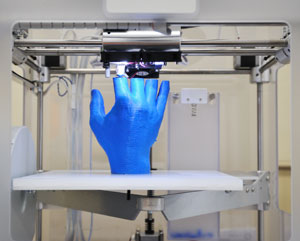
a 3D printer printing a hand

3D Evidence Enters the Courtroom

The latest tool for expert witnesses who want to explain a crime or accident scene to a jury is the 3D laser scanner. A 3D scanner creates a three dimensional image of the area it scans. Used indoors, it can capture all the contents of a room, from floor to ceiling. Used outdoors, the scanner will record everything within a specified distance.

Commonly used as a tool in industrial design and engineering, medical imaging, and the entertainment industry, lawyers and expert witnesses are beginning to appreciate the value of virtual reality as a litigation tool. As law enforcement agencies and experts make greater use of 3D laser scanners, 3D evidence will play an increasingly dynamic role in the courtroom.

Expert Evidence in 3D

Photographs of accidents and crime scenes have value, but they rarely have the same impact on juries as a three dimensional representation. Virtual scans allow jurors to visualize the scene in more detail than two-dimensional photographs permit. Unlike photographs, a scan’s perspective can be changed to give the jury a ground level or “bird’s eye” view of the scene. A three dimensional representation even allows an expert to take a jury on an animated “fly through” of a crime or accident scene.

Forensic experts also appreciate the wealth of data they can glean from 3D images. An accident reconstruction expert, for example, often works from measurements and photographs taken by accident investigators. Particularly when the investigators are untrained, the photographs and measurements may not give a reconstruction expert a complete set of data. A 3D scan, on the other hand, allows the expert to make precise measurements of distances between objects that are depicted within the scan. The clarity of 3D imaging also helps experts determine where an impact occurred by showing gouges in the pavement and other markings that might not be apparent from two-dimensional photographs.

Fortunately, 3D scans are becoming available to experts when they analyze crime and accident scenes. More and more law enforcement agencies are investing in 3D laser scanners to document the scenes of serious accidents and crimes. That trend is likely to continue as 3D laser scanners become more affordable.

Daubert Considerations

In their book, The Crime Scene: A Visual Guide, Marilyn T. Miller and Peter Massey point out that evidence gathered by means of a 3D laser scanner has survived several Daubert challenges. The Daubert standard governs the admissibility of evidence in federal court and in most state courts.

That 3D scan evidence is routinely admitted should not be surprising. In many cases, the evidence is not challenged. A 3D scan is essentially a virtual reality photograph. Just as courts admit photographs into evidence if a witness establishes that the photograph accurately represented the scene, a 3D scan should be admitted under the same standard. Assuming that the expert’s opinions pass the Daubert test, the use of a 3D scan to illustrate the expert’s reasoning is likely to be helpful to the jury, and should rarely be objectionable.

3D Printers

Experts often use demonstrative evidence to help the jury understand their testimony. An orthopedic surgeon who points to the bones on a plastic skeleton while testifying is a classic example.

If 3D scans are a modern version of traditional photographs, exhibits created by 3D printers are the modern form of demonstrative evidence. A plastic skeleton can be helpful, but an exact replica of a patient’s damaged knee joint gives juries a much better sense of a plaintiff’s injury.

A 3D printer builds a model (in some cases, an exact duplicate) of an object from a digital file made with a 3D scanner. How closely the model will approximate the original depends upon the quality of the printer and the materials used to “print” the model. Typical models are made from thermoplastics, but more expensive printers can use ceramics and metals to build models that are virtually interchangeable with the copied object.

Using 3D printers to build scale models of rooms, buildings, and crashed vehicles generally results in a more accurate model than one that is constructed by hand. In addition, manufacturing an elaborate model with a 3D printer is usually quicker than making traditional models.

Only the expert’s imagination limits the potential uses that can be made of 3D scanners and printers. As the devices become more affordable, lawyers and experts alike should keep their benefits in mind when they think about how to present expert evidence to a jury.

Conviction Reversed Because Defense Expert Not Allowed to Testify

Conviction Reversed Because Defense Expert Not Allowed to Testify

In a decision released on January 20, 2016, the Arizona Supreme Court decided that a trial judge erred by refusing to allow a criminal defendant to call an expert in experimental design as a defense witness in a murder trial. That ruling allowed the testimony of the state’s firearms expert to go unchallenged.

The Evidence Against Romero

A man in Tucson died from two gunshot wounds in 2000. There were no witnesses to the shooting. Witnesses did see men leaving the scene in a pickup truck after hearing gunshots, but they could not agree upon the number of men or the make of the truck. Spent .40-caliber shell casings were found at the scene.

A month later, the police stopped Joseph Javier Romero for reasons that were unrelated to the shooting. They found a .40-caliber magazine in his possession. They also discovered a .40-caliber Glock handgun with a missing magazine along the route that Romero had traveled. The police drew the inference that Romero had jettisoned the gun, although they did not see that happen.

Seven years later, a cold case unit inspected a cellphone that was found next to the victim’s body. The phone’s owner told the police that “Joe,” his drug dealer, had borrowed his pickup truck in 2000. A firearms examiner conducted a ballistics test and concluded that the shells found at the scene had been fired from the Glock that the police associated with Romero. Romero was charged with first degree murder. A hung jury resulted in a second trial.

Rulings on Expert Testimony

Before Romero’s second trial started, the defense moved to exclude the testimony of the State’s firearms expert. The State, in turn, moved to exclude the testimony of Romero’s expert. The motions were based on Arizona’s version of the Daubert rule, which requires expert testimony to be based on a reliable methodology.

The trial court reviewed the proposed testimony of both experts. Romero’s expert did not address whether the State’s expert correctly analyzed the markings on the shell casings. Rather, he testified that no analysis of such markings is capable of yielding a reliable result, given the limitations of the experimental methods used by firearms examiners.

The trial court determined that the State’s expert based his conclusion on a reliable methodology and therefore permitted the expert to testify. The court excluded the testimony of the defense expert after concluding that the expert was not qualified to testify as a firearms expert and that submitting his testimony to the jury would invite the jury to second-guess the judge’s pretrial finding that the methodology used by the State’s expert was reliable.

Romero’s Retrial and Appeal

During Romero’s second trial, the State’s expert testified that the marks made on casings found at the scene of the shooting “matched very well” marks made by the gun that the police associated with Romero. The jury acquitted Romero of first degree murder but convicted him of second degree murder.

On appeal, Romero argued that his right to present a defense was violated by the judge’s exclusion of his expert’s testimony. The Arizona Supreme Court agreed.

The trial court and a lower appellate court decided that the defense expert was not qualified to testify, despite his review of applicable scientific literature, because he had never testified as a firearms expert before, had never conducted his own research on firearms identification, and had never tried to identify firearms based on the toolmarks found on expended shells. The state supreme court rejected that argument, noting that the witness’ expertise was not in firearms identification but in experimental design.

The court noted that the defense was not required to offer testimony from the same kind of expert that the state used. Rather, it was entitled to offer expert evidence that would help the jury decide the case. The defense expert would have helped the jury understand that the scientific methodology used by firearms experts differs in significant ways from methodologies that are routinely adopted by other scientists. Unlike other scientists, firearms experts do not follow standardized protocols that permit independent verification by other examiners. In addition, firearms identification relies on subjective assessments rather than an objective assessment based on a comparison of test subjects to control subjects.

The defense expert would have testified that the methodology used by firearms experts falls short of the scientific standards for experimental design, and that those flawed design standards undercut the reliability of the results the experts reach. That testimony would have helped the jury evaluate the evidence offered by the State’s firearms expert. The testimony was therefore admissible under Daubert’s “helpfulness” standard.

The defense expert had a Ph.D. in experimental psychology from Stanford and taught experimental design at Yale and other universities. He makes a profession of analyzing scientific methods. His careful study of the experimental methods used by firearms experts qualified him to render expert opinions about the validity of those methods.

Since the expert was qualified to give opinions that would have assisted the jury in evaluating the state’s evidence, the supreme court concluded that he should have been allowed to testify. The trial judge misunderstood his role when he ruled that the defense expert should not be allowed to undermine his determination that the State’s expert’s methodology was reliable. The judge’s assessment permits the jury to hear an expert’s testimony, but it does not require the jury to believe the expert. Evaluating expert testimony, once it has been admitted into evidence, is the function of the jury, not the judge.


Rap is poetry

Rap Lyric Experts Help Lawyers in Criminal and Civil Cases

Rap lyrics are often condemned as vulgar, misogynistic, and violent. In some cases, they might be, but Professor Charis Kubrin, an expert witness who studies perceptions of rap and hip hop in society, believes that rap is unfairly stereotyped as dangerous or threatening by prosecutors and other government officials who use rap lyrics as evidence against their creators.

Professor Kubrin argues that rap, like other music, is a form of artistic expression. Unlike other art forms, however, society is less likely to grant rap artists a poetic license to express themselves in figurative terms. Rap lyrics are taken literally and rappers are judged accordingly. Professor Kubrin contends that courts do not treat any other form of artistic expression in the same way.

Rap On Trial

In her research, Prof. Kubrin has identified a disturbing trend to introduce rap music lyrics as evidence of a defendant’s guilt. As an example, she cites the prosecution of Torrence Hatch (“Lil Boosie”) for first-degree murder. Prosecutors had no physical evidence to support their claim that Hatch hired a friend to kill a Louisiana resident. Their case was based on a statement that the friend recanted at Hatch’s trial. To support their shaky charge, prosecutors introduced lyrics from a number of Hatch’s songs, including “187,” which referred to people “who tried to play me … they dead now.”

The prosecutor’s tactics were justly criticized as putting rap on trial rather than Hatch. The jury apparently agreed. It acquitted Hatch after just an hour of deliberations.

Other high-profile rappers, including Snoop Dogg, have had their rap lyrics used against them in criminal trials. Snoop Dog was acquitted, but lyrics appear to have influenced juries in several cases involving amateur rappers. Prosecutors encourage juries to view rap lyrics as a confession when, in fact, they may be an artistic commentary on violence in society.

The Role Of Rap Experts

Expert witnesses are common in intellectual property cases affecting the music industry, particularly those that address sampling. Expert testimony is playing an increasing role, however, in other cases involving the use of rap lyrics as substantive evidence.

Professor Kubrin first testified as an expert in a case involving an aspiring rapper who was charged with attempting to make terrorist threats. The prosecution was based on a piece of paper found in a car that appeared to solicit PayPal donations in order to avoid “a murderous rampage similar to the Virginia Tech shooting.” The document’s author denied that the words were anything other than notes for rap lyrics, an explanation supported by notes on the other side of the paper, including “let them booty cheeks hop.”

Kubrin testified that violence and misogyny translate into sales and respect in the rap business. Boastful fabrication of violent acts is therefore commonplace in the industry. Despite her efforts to convince the jury that the defendant’s words were notes for a rap song and not a terrorist threat, the defendant was convicted.

Kubrin, at least, was given the chance to testify. Judges have sometimes been reluctant to admit the testimony of expert witnesses in criminal prosecutions that are based on rap lyrics. Ronnell Wilson, an amateur rapper, was sentenced to death after a federal jury found him guilty of murdering two undercover police detectives. Prosecutors introduced evidence of rap lyrics scrawled on a sheet of paper in which Wilson referred to leaving “.45 slugs in da back of yo head.”

Wilson’s defense attorney wanted to call an expert to testify that rap lyrics often describe violent and antisocial acts, that those lyrics are typically based on imagination and fantasy without being rooted in actual events, and that the imagery in Wilson’s lyrics was commonplace in rap music. The trial judge ruled that the expert testimony was inadmissible because Wilson’s untimely notice of the expert testimony failed to describe “the bases and reasons for those opinions,” as required by Rule 16 of the Federal Rules of Evidence. The court also suggested that the testimony would not have assisted the jury, which (according to the judge) did not need expert testimony to understand that not all rap lyrics are based on actual events.

Rap And Free Speech

Professor Kubrin has also used her credentials as an expert to help lawyers prepare amicus (friend of the court) briefs in civil cases. For example, when a student was suspended from high school in Mississippi for writing “a profanity-filled rap that decried two coaches accused of sexual misconduct,” Prof. Kubrin’s expertise assisted lawyers who are asking the Supreme Court to rule that the school district violated the student’s right to free expression. The amicus brief was founded on Prof. Kubrin’s argument that the school district “punished a young man for his art — and, more disturbing, for the musical genre by which he chose to express himself.”

As Prof. Kubrin points out, Johnny Cash didn’t shoot a man in Reno just to watch him die, and Bob Marley didn’t actually shoot the sheriff. Artistic license to refer to fictional violence in country music, reggae, or rock does not seem to extend to rap music. To address that double standard, expert witnesses are increasingly being called upon to educate juries and courts about the stereotypes associated with rap music and the social concerns that motivate artistic expression by rap artists.